If you’re a new Seminary Teacher, like me, you’re wondering how to begin planning for these daily lessons. While the gospel-teaching part of a Seminary lesson is probably familiar to you (since you’ve probably taught Primary, young women, priesthood, Sunday school, etc.), the structure of a Seminary class may be unfamiliar. Scroll or jump down using the following jump menu:
- Basic Class Structure
- Seminary Materials
- Planning a Lesson Calendar
- Other Calendaring Things to Consider
- Doctrinal preparation
- Parent Meeting
- In-Home Student Meeting
- Seminary Class Officers
- Five Minute Fillers
The Basic Seminary Class Structure
A typical Seminary class consists of the following:
- Welcome / Announcements
- Song
- Opening Prayer
- Lesson
- Closing
So yeah, Seminary is basically the same as every other church meeting. Using the above structure, you will begin planning a basic skeleton for your lessons. Many teachers add in time for devotionals, missionary moments, scripture mastery, and/or journaling to the above list. Remember to keep things that might get silly (scripture mastery or missionary moments) before the prayer. An opening song and prayer act as a transition to the more serious portion of a meeting.
Seminary Materials
There is a large list of Seminary Materials. You can get some of them online and others from your Seminary representative. I’ve put an asterisk (*) beside the items that my teacher friends consider essential:
- *** The Seminary Teacher’s Manual for your course of study. This year (2011) it’s Old Testament. The four courses rotate in this order: Old Testament, New Testament, Book of Mormon, Church History/D&C. You can download this at http://lds.org/si/ but you must have an LDS Account AND be set as a Seminary teacher in MLS. Talk to your unit clerk about that setting in MLS.
- *** Teaching the Gospel: A Hand book for CES Teachers and Leaders
- *** S&I Policy Manual for Stake Teachers (This was online last week when I read it, but today the link is bad. I will post the hyperlink in case it comes back https://lds.org/si/policy-manual-sections-for-stake-teachers)
- *** Reimbursement Forms – Seminary teachers can be reimbursed for travel to a classroom for teaching and for travel to inservice meetings. They can also be reimbursed for certain kinds of classroom supply and activity purchases.
- *** Scripture Mastery Cards – The church produces a set of 25 scripture mastery cards for each of the four courses of study. You will need one set per student and one for yourself.
- *** a set of scriptures for yourself and one per student in the class.
- The Student Manual for your course of study – none of the daily seminary teachers in our area use this. If you are Home Study, you will require one per student. This is available at http://seminary.lds.org/
- Education: Your Key to Opportunity DVD. See also http://besmart.com/
- “DVD Presentations” for your course of Study
- Visual Resource DVDs for your course of study. These are very helpful
- Seminary Song DVDs
Other Materials
At a minimum, you will require
- paper for classroom writing exercises or journaling
- scripture marking pencils, 1 per student plus some extras
- a few extra sets of scriptures. Some units use “class scriptures” for the students to keep at class, and they keep their personal set at home. (I don’t like this myself, but some have found it necessary.)
My friend DeAnn gives each student a zipper style pencil bag where she puts a red scripture-marking pencil, a set of scripture mastery cards, a pen, and another regular pencil . They also receive a spiral bound notebook and a composition book. The composition book is used for gluing in quotes and writing personal FITs (Feelings, Impressions, Thoughts). It’s a book you’d keep. The spiral notebook is scratch paper for class exercises you wouldn’t necessarily keep. She also uses it when she has the class write letters to missionaries. You may require scissors, glue, crayons or markers. If you are meeting in a church building, ensure that you receive a library key for access to materials, posters, video tapes, the tv / dvd machines, cd players, and the photocopier. If you have access to a chalkboard, remember chalk and erasers. This is probably in your building library. Dry erase board? Markers and erasers. You can see see my blog entry with pictures of other Seminary materials.
Planning a Lesson Calendar
I have spoken with several teachers now, and while some teachers do not use a lesson calendar, for my first year I am finding it helpful to plan my lesson time ahead. Here’s how I did it (and fellow teacher DeAnn uses the same method):
Gather materials
I used the following items
- A school calendar for the upcoming year
- A blank calendar for you to write on. I used this one.
- A copy of the reading chart from the student manual (p 6)
- A copy of the pacing guide from the teacher manual (pps 5-6)
For my first calendar, I was planning scripture mastery and enrichment exercises on Fridays, so I used a list of scripture mastery verses so that I could *try* to emphasize scripture mastery verses as we came to them. During the first few weeks of class, Seminary teachers are supposed to include a lesson entitled “Education: Your Key to Opportunity”. This is a DVD with several video segments that you should include in a lesson emphasizing the BYU requirements and the importance of seeking education for a trade or a college degree.
Fill in School Dates
I first filled in the essential dates from our school calendar, marking exams, early release, holidays, et cetera. Note your first and last day of Seminary.
Count weeks
For each week that has at least 4 days, write a week number beside it. Some weeks, like the Thanksgiving holiday, may only have 2 or 3 days. Plan time to finish that week’s scripture block during the following week. Make adjustments to fit your school calendar needs. The typical Seminary course lasts 36 weeks.
Pacing
I then used the pacing guide from the Teacher Guide (pg 5-6) and correlate it with the Reading Guide in the Student Manual (p 6) to plan the scripture passages you will cover each day. I based my lessons off a 4-day schedule, with 1 day of enrichment activities that I’m calling Fabulous Friday. My friend DeAnn plans a 5-day lesson schedule and includes scripture mastery days only once or twice a month according to “heavy” event days on the school or stake calendar. You can set the pacing however works best for you.
Other Things to Consider
You will want to consider other things when planning your lessons. Here are some examples: How much time do you have for lessons each day? We have very little time in Old Testament to cover Psalms, Proverbs, and Ecclesiastes. Do you want to read a Psalm every day? Encourage student participation with a devotional? How will you assign devotionals (weekly, daily, other) Will you use a scripture journal? Will you have scripture mastery activities weekly, daily, or on some other schedule? (A note on scripture mastery. I just found out that students are not required to memorize all 25 mastery scriptures, but there should be an emphasis on being able to find the mastery scriptures and what those mastery scripture is about. My veteran teacher friend, DeAnn, uses the popular Scripture Squares method daily to work on scripture mastery, covering a little bit each day. She also spends one or two days a month on Scripture mastery alone. She chooses her scripture mastery dates to coincide with the morning after calendar events that will cause students to be out late — like a school dance, exams, or New Beginnings — to ease the burden on students.)
Reading Assignment Calendar
I passed out a reading assignment calendar to each student and their parents at the beginning of the year. It has been so successful, and I will do it again next year. You can read about how keeping the students together with a reading assignment chart worked for our class.
Doctrinal Preparation
Here are some ideas to help you prepare for teaching doctrine during the school year:
- Read the book of scripture that you’re studying
- Mark your manual ahead of time with topics you’d like to teach. Make notes if you get an idea about a personal experience you can share.
- Begin saving news articles or other quotes that you’d like to share
- You might provide students a reading list and suggest that they begin reading ahead.
- Suggest that students get a head start on Scripture Mastery, especially if there’s a particularly long one (like in D&C).
- Print handouts from http://si.lds.org/ and place them in your lesson manual where you might use them.
I attended a class where a veteran Seminary teacher said something that has helped my lesson preparation. He said, “A lot of times teachers say they’re learning more when they prepare lessons than the students do in their class. If you’re learning more than the student, you’re doing it wrong.” I have thought on this time and time again as I prepare lessons. In the end, it’s not about me learning some dazzling new doctrinal wonder. It’s about me helping my 14-18 year old students feel the holy ghost. I have learned that I can’t amaze everyone all the time. Something that seems new or interesting to me may not be to anyone else in my class. But if I teach pure gospel truth — the doctrines of the gospel — the Holy Ghost can be present in my class and he will give each student the sermon they need to hear. When the Holy Ghost is present, each student can gain insights according to his or her own ability and needs. Those insights may not even have anything to do with the facts of the lesson, but they will be custom tailored to that student’s needs. I love the doctrines of the gospel found in the scriptures — those plain and precious truths. They are amazing, and I hope to help my students feel some of that wonder by teaching them truths that invite the Holy Ghost. For me, that’s what teaching Seminary is all about.
Parent Meeting
You may want to meet with each student and their parents individually before class begins to set up rules and expectations, answer any questions, help with concerns, encourage enrollment, and to gauge the level of support at home for Seminary. During that meeting you would also explain the grading system and how students receive credit. I liked the way our S&I rep suggested we introduce the program to less active families: “We have a program that will bless your family; can help your child avoid drugs, gangs, and other addictions; encourage college enrollment; help your child associate with other teens with good values; and will help your child draw closer to God. It’s Seminary.” However, many teachers use a group parent meeting in the interest of time. During that meeting the teacher outlines class room rules and expectations. They explain the grading system and how students receive credit. This might be a time for you to show part of the DVD Education: The Key to Opportunity, so that parents and youth are aware of application requirements at church schools. The teachers I spoke with found that meeting individually was extremely helpful, especially as regards behavior issues. But most of them still do a group meeting in the interest of time.
In-Home Student Visit
I missed out on our parent meeting last year because I was out of town, however, I did go to the homes of all my students before class started. I gave them a copy of the reading chart for the year, a copy of my handbook, and a set of scripture mastery cards. I really liked the in home visit, and will do it again this year. Read about my experience meeting with all my students here.
Seminary Class Officers
This section has moved to its own page: Seminary Class Officers
Five Minute Fillers
I’ve added this section now that I’ve learned a few more things during the past year teaching.
During the year you may find that a lesson has ended unexpectedly quickly or that the material you’re preparing will not fill class time. You should have a couple of ready-to-go activities that require absolutely no preparation, but that can fill up a few minutes of class time with meaningful learning. You won’t be using these every day, but have them ready before class ever starts so that you can use them in a pinch.
Here are some examples of things I used as five-minute fillers:
- Gospel Timeline word strips – I learned this as “Name Game” for Old Testament. Print out a few copies of word strips and have students race to see if they can place them in chronological order faster than another group or if they can beat their previous time. These can be laminated and tucked away in ziploc bags and brought out any time you need a quick lesson filler. Hold back some of the strips if you haven’t learned them, and add them in as the year progresses.
- Books of the Old Testament word strips – I printed out some word strips for the kids to practice placing the books of the Old Testament in order if I needed some fill time. I didn’t start using this activity until the kids had already learned the song for all the books of the Old Testament. The version I made are color-coded by Books of Moses, History, Poetry, Major Prophets, and Minor Prophets. You don’t have to color-code them if you don’t want to.
- Magic Squares Ticker Tape Race – Buy a roll of adding machine paper from Staples. When you need to fill a little time, select a Magic Square rhyme you’d like your students to focus on. Some rules might include No abbreviations of books, but using ‘&’ is okay (that’s how DeAnn does it). The kids will write the Magic Square rhyme you’ve chosen as fast as they can, including the passage where it’s found, as many times as possible during a few minute time period. At the end of time, everyone counts up how many words they’ve gotten. You can award tickets for March Madness or Isaiah’s Insanity Challenge, or just give them bragging rights. The purpose of this activity is to cement a magic square rhyme in the heads of students.
- Scripture Mastery Cards – Have students pull out a scripture mastery card and begin memorizing it for however much time you’ve got in class.
- Scripture Mastery Music – If you’ve got internet access in your classroom, bookmark a few scripture mastery songs and play one so that students can learn a scripture mastery passage.
————===========———- Now check out the First Week of Class
More Seminary Help
General Conference Ideas for Seminary
During Your Lesson
The First Week of Class
Questions about Seminary Structure
Selecting Music for Seminary Classes
The Learning Assessment
Christmas Ideas for Seminary
Seminary Class Officers
New Seminary Products
-
Sale!

Infinity Charm – CLEARANCE
$0.99$0.25 Add to cart -
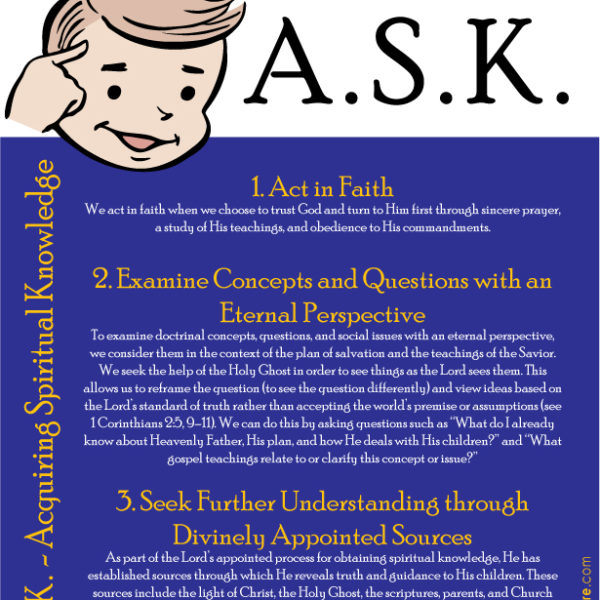
ASK Poster – Retro Boy
$3.99 Add to cart -

Pray Light Switch Cover – 2 gang
$4.99 Add to cart -
Seminary Basic Doctrines – Simple Posters
$2.49 Add to cart -
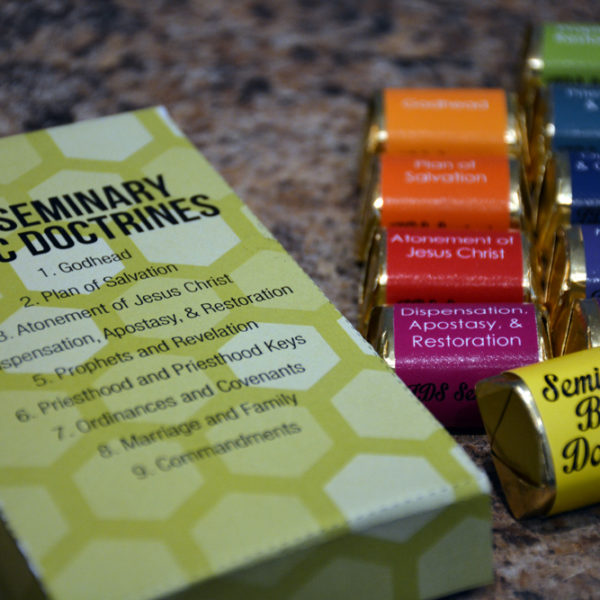
Seminary Basic Doctrines Candy Box Pattern
$3.49 Add to cart -

CTR Gift Box
$2.49 Add to cart -

Seminary Graduation T-Shirt – FREE customization
$17.99Select options -

Read Every Day RED Program T Shirt
$17.00 Select options -

I Read Every Day RED Program Award T Shirt
$18.99 Select options -

Bible Bookmark – flat style
$3.95 Add to cart -
Book Of Mormon Bookmark – flat style
$2.99 Add to cart -
Sale!

Happy Birthday Lip Balm with free customization
$1.99$1.89 Add to cart -

Nauvoo Temple Starstone / Star Stone Charm
$3.99 Add to cart