Amos 3:7 Wordstrip
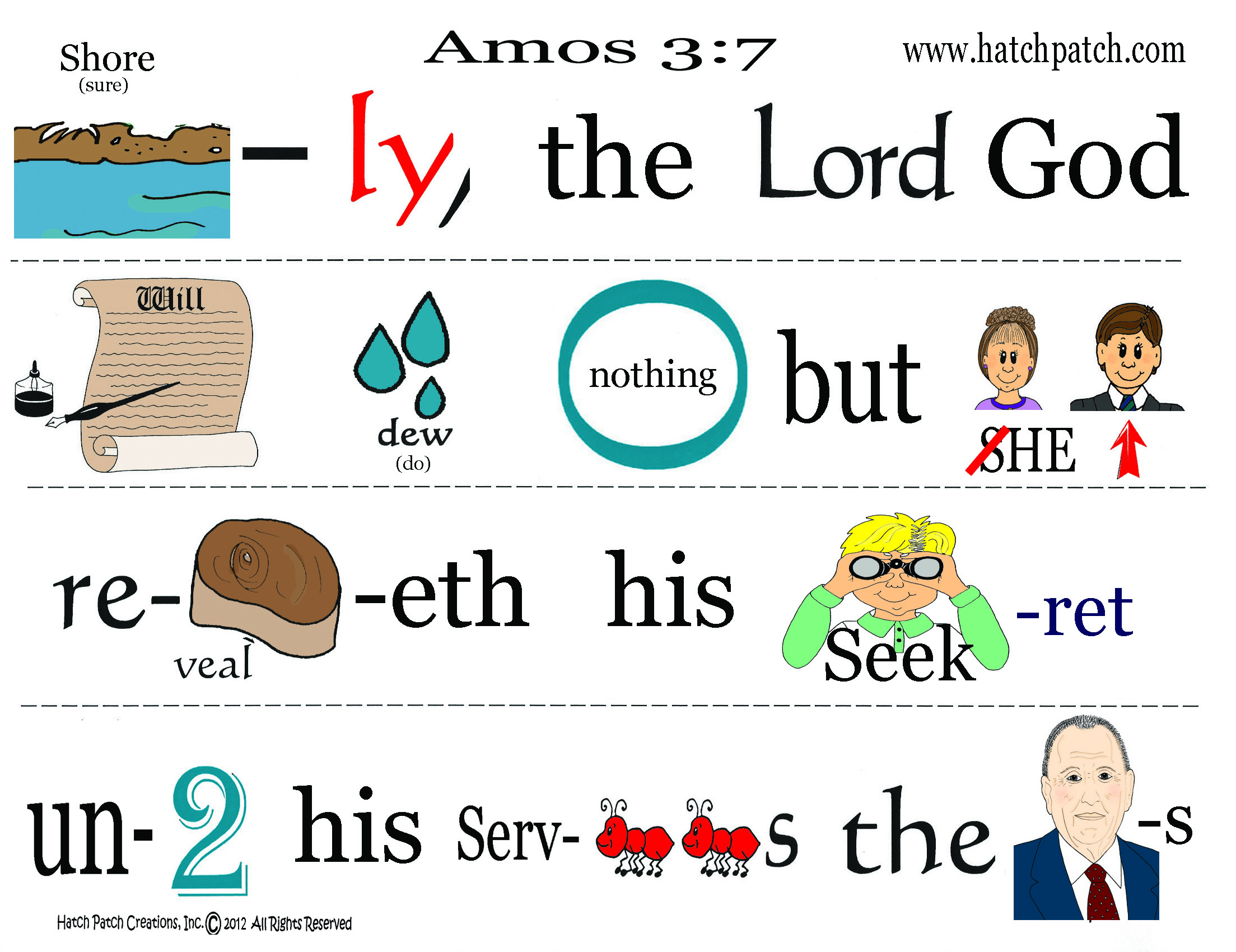
Here is a wordstrip to help children learn Amos 3:7
Perfecting the Saints — One Lesson at a Time
Here is a wordstrip to help children learn Amos 3:7
Think of ways to group your text to help you cover material effectively. Then WRITE VERSES ON THE BOARD to help students get through the material efficiently during your lesson. EXAMPLE: On the easel I wrote the following for Deuteronomy 8: Blessings of REMEMBERING v 2 v3 v4 v5 Dangers of FORGETTING v11 vv12-14 v17 v19 Here’s what I had in my notes to help us find answers: Blessings of…
Read more
Ask students to find a scripture reference that answers a certain question. EXAMPLE: During a discussion on the word of wisdom in Daniel 1, I asked students to find a scripture reference to prove THAT God gives blessings to the obedient or WHY He does so, or HOW he blesses the obedient. They all found such great scripture references for this. I was shocked. Only a few came up with…
Read more
A literary foil is someone who highlights another character’s trait, usually by contrast. The scriptures are full of these character foils. Examples include God/Christ v Satan, Cain v Abel, or Nephi and Sam v Laman and Lemuel. Often times a chapter or story will highlight events in two different people or groups of people. This is done on purpose and oftentimes there are direct differences that were meant to be…
Read more
What are things in the scripture block that you could actually see, touch, smell, visualize?. Picture these in your mind or better find the actually object and see what it teaches you about the way it is used in the verses you are reading. Look For: Look for objects in the scriptures–things that you could see, hold, touch, etc. Example: Isaiah 5:18 describes people that carry their sins like beasts…
Read more
When I teach, I try to apply the law of witnesses: “in the mouth of two or three witnesses shall every word be established,” (See D&C 6:28, 2 Corinthians 13:1, Deuteronomy 19:15, 2 Nephi 29:8, Matthew 18:16) to my Lesson preparation. The idea is that as teachers, we’re always looking for “witnesses” to the word. When we establish the word with multiple witnesses, or testimonies, we help it sink deeply…
Read more
Oftentimes the Lord makes a list of attributes or qualities that are worth noting and titling in our margins. Have students “mark a list’ of items in their scriptures. Look for items set off by commas, or lists of things to get a certain result. The items may be contained in more than one verse. EXAMPLE: While teaching Amos 4, I asked students to mark in their scriptures the ways…
Read more
Paradoxes are two seemingly different things that are put together in a way that teaches a lesson or truth. Look For: Look for a statement or joining of two things that teach a truth but seem to differ from each other. Example: Matt. 10:39 He that findeth his life shall lose it: and he that loseth his life for my sake shall find it.. (Sometimes the paradox is implied and…
Read more
How does connecting different parts of the story in the same or other chapters help make one scene more powerful and meaningful. Look For: Put parts of a story or teaching together (don’t forget previous and future chapters!) and “look for” connections. Examples >1 Samuel 1 –2 Hannah’s sacrifice of giving up her firstborn Samuel when you connect it with the suffering she went through (v. 6-7). It also makes…
Read more
Using the chalkboard or an easel to show a brief lesson outline can help you cover material efficiently and effectively. You’ll find that writing verses on the board will help students follow and anticipate the direction of your lesson, resulting in better discussion. It will also help you stay on task and more easily cover material. EXAMPLE: When teaching the second coming from Isaiah 26, I had written on the…
Read more
If a student uses the phrase: “the scriptures say” or “the prophets say’, consider if you can take the opportunity to teach students the importance of being able to find and read a scripture during a discussion. It’s best to have scriptures memorized, but if not, teach students how to find scriptures quickly in a pinch. This skill is an absolute MUST for future missionaries and really any person in…
Read more
Invite a guest to come share an experience with a gospel topic with the class. Listen during sacrament meeting, Sunday School, and other times to find people who have experiences or testimony that is valuable to share with your students. I’ve had great success doing this, especially when I take the time to explain the purpose of my lesson to the guest. “We’re having a lesson on missionary work; would…
Read more
THIS WEBSITE WILL CEASE OPERATIONS ON DEC 31, 2018.
We are moving to http://NoBoringLessons.com/ where you can find Come Follow Me Lesson ideas for the new 2019 curriculum Dismiss