Mormon Share > Teaching Techniques
Teaching Techniques
Jennifer Smith
December 31, 2012
Where do you see the Savior in the story? Is His atonement or attributes represented in the verses you read? How could these verses be an example or type for Christ? Don’t just look for direct symbols of Christ but look for things that show how Christ might act or how he may have influenced a person’s behavior. Look For: Look for verses or phrases that describe Christ’s attributes, atonement,…
Read more
Jennifer Smith
December 31, 2012

Assign students a passage or set of several verses to read. Have students imagine they are the prophet who would like to tweet the main idea of this passage or set of verses to his followers. What might he write? What will tell followers the most important information in fewer than 140 characters? After a few moments, share the tweets. Encourage them to write the best tweets in the margin…
Read more
Jennifer Smith
December 31, 2012
In Luke 10:25-37, we find a lawyer trying to trip up the Savior with his disruptive questions and justify himself in sin: And, behold, a certain lawyer stood up, and tempted him, saying, Master, what shall I do to inherit eternal life? He [Christ] said unto him [the lawyer], What is written in the law? how readest thou? [Here, Christ is establishing a starting point. He’s asking the lawyer to…
Read more
Jennifer Smith
December 31, 2012
Where are the symbols or figurative language in these verses? What are the symbols trying to teach? Contemplate the symbols and figurative language. Look For: Look for words that are symbols for something or someone. Example: In the book of Revelation, John continually chooses to represent Christ as the conquering hero but symbolically calls him the “Lamb of God.” Why this symbol and not an animal more powerful? Why is…
Read more
Jennifer Smith
December 31, 2012
Have kids read a set of scriptures or passage. Pick an Appetizer – verse(s) that tantalize your own spiritual taste buds Beverage – cross-reference that helps wash down the Main Dish Main Dish – verse(s) that give an overall understanding of the entire block or main principle Dessert – short phrase that is spiritual topping to it all This exercise could be done as individuals, as groups, or as a…
Read more
Jennifer Smith
December 31, 2012
Elder Richard G. Scott taught, “Never, and I mean never, give a lecture where there is no student participation. A ‘talking head’ is the weakest form of classroom instruction.” (Address to CES Religious Educators, February 4, 2005) Lecture has its place in teaching, but teacher presentation or lecture should not be your entire lesson. It should not, in my opinion, make up the majority of your lesson either. I learned…
Read more
Jennifer Smith
December 31, 2012
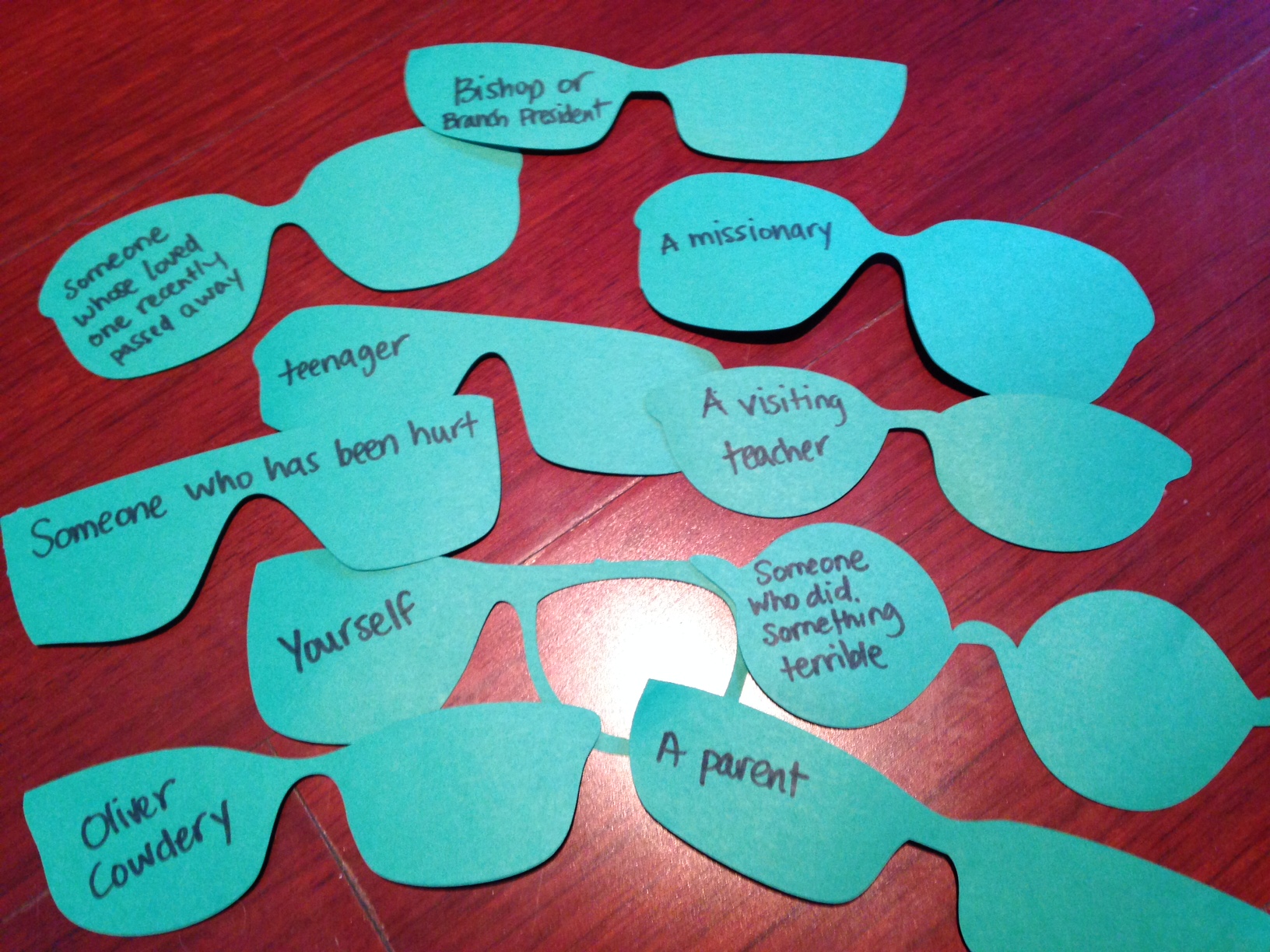
Read the same block with different eyes looking for different things, as if you were wearing a new pair of glasses with different lenses. A parent, a bishop, a missionary, a teenager, someone tired and depressed, someone newly married, someone needing repentance, someone who doesn’t get along with their parents, etc. For example, ask the students how this scripture verse might affect a person who has recently experienced a great…
Read more
Jennifer Smith
December 31, 2012
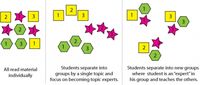
Jigsaw was first developed in the early 1970s by Elliot Aronson and his students at the University of Texas and the University of California. To teach using the Jigsaw method, “divide a topic up into, say, four sub-topics. For example childhood diseases could be divided into mumps, measles, whooping cough and German measles. Alternatively students can be given four different key questions or ‘spectacles’ that require students to analyze the…
Read more
Jennifer Smith
December 31, 2012
Find a powerful footnote that helps explain, empower, or give insight to a verse in the block where you were reading. Look For: Look for the little letters that precede a word that indicates a footnote. Example: “And then the Lord acleansed the man . . .” (Adapted from Panning for Gold: Various Methods to Understand and Apply the Scriptures to Ourselves by Eric Bacon, Northwest Area Seminaries) Great for: Helping…
Read more
Jennifer Smith
December 31, 2012
This is a familiar but underused teaching technique. When you invite students to role play, “The students’ job is to shore up their friend, and they almost always bear testimony in the process — almost without realizing it.” (Becoming a Great Gospel Teacher, Eaton and Beecher, p 91) “We’ve had our students play everything from missionaries to parents of troubled youth to concerned friends. The more realistic the situation, the…
Read more
Jennifer Smith
December 31, 2012
Paradoxes are two seemingly different things that are put together in a way that teaches a lesson or truth. Look For: Look for a statement or joining of two things that teach a truth but seem to differ from each other. Example: Matt. 10:39 He that findeth his life shall lose it: and he that loseth his life for my sake shall find it.. (Sometimes the paradox is implied and…
Read more
Jennifer Smith
December 31, 2012
Our SI rep has been teaching us that when you separate into groups you should assign every member of the group a role. This helps each student participate in the group learning process. No matter the size of your group, you should assign a role to each student. Assignments may be given by the teacher, by a group/zone leader, or randomly. Here are some roles you might use in your…
Read more